
Understanding
TMS treatment
A different way to manage persistent depression and complex mental health conditions
Medication and talk therapy aren’t your only options for treating persistent depression, PTSD and other complex mental health conditions. If first-line treatments haven’t helped, it may be time to try transcranial magnetic stimulation at our comfortable clinics in Margate and Caboolture.
What is TMS?
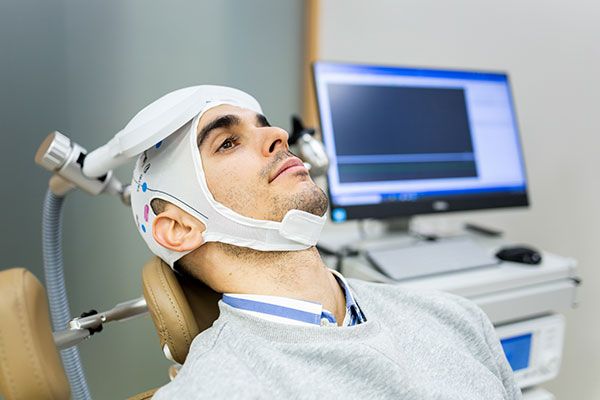
Transcranial magnetic stimulation (TMS) uses targeted magnetic pulses to activate areas of the brain involved in mood and emotional regulation. These pulses generate small electrical currents, which can influence neural activity in those regions. In this way, TMS may help modulate brain circuits involved in depression and related conditions.
TMS therapy:
- does not involve medication
- does not require anaesthesia
- does not involve any out-of-pocket costs if you qualify for Medicare funding.
Would TMS therapy help me?
TMS treatment may help if you:
- Live with a serious mental health condition like depression, post-traumatic stress disorder, or anxiety
- Have not found relief using first-line treatments like medications and psychological treatment
- Are troubled by my medication side effects, or do not want to take medication.
All treatment decisions are made on an individual basis and guided by clinical judgement.

What is TMS treatment like?
TMS therapy is quite straightforward. Here’s what to expect before, during and after your treatment.

1. Consultation
It begins with a consultation with a psychiatrist who talks to you about your symptoms, history and previous treatments to determine if TMS would be suitable for you.

2. Treatment Schedule
If TMS is recommended, it will take place in our
beautifully appointed rooms in Margate or Caboolture. These have been carefully designed to feel warm and inviting, with plants, music and other soothing elements. You’ll come here several times a week over the course of your treatment.

3. During Your TMS Session
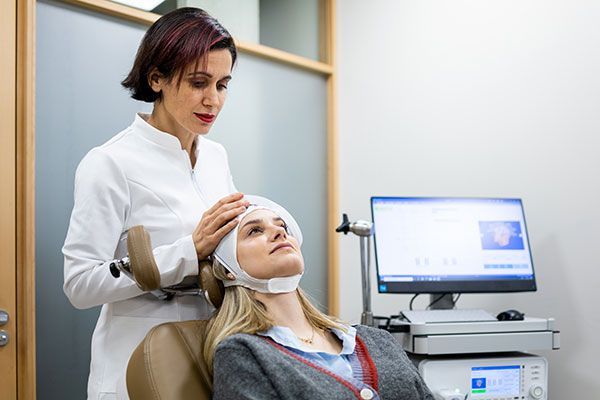
For your treatment, you’ll sit comfortably while a small device is positioned against your scalp. You may feel a tapping sensation during treatment, but this should not be painful or uncomfortable (if it is, please tell us so we can adjust the settings). Each session lasts 20-30 minutes and we encourage you to choose your favourite playlist or podcast to help pass the time.

4. After Your Session
Once your session finishes, you continue your day as planned. There’s no downtime or recovery required (though there’s no harm in treating yourself to a coffee or a nice walk either!).

5. Ongoing Treatment Course
You return a few days later for your next session. TMS is delivered as a structured course of care rather than a one-off appointment. An initial course of treatment may require
20-30 sessions. Your progress is monitored throughout your treatment, with adjustments made where needed.
TMS therapy is quite straightforward. Here’s what to expect before, during and after your treatment.
What does TMS treat?
TMS is most commonly used for major depressive disorder or treatment-resistant depression.
Under the guidance of a psychiatrist,
TMS may also be considered
as part of a broader treatment plan for individuals with:
- generalised anxiety
- post-traumatic stress disorder (PTSD)
- obsessive-compulsive disorder (OCD)
- addiction and substance use disorders
- chronic pain
- insomnia
- tinnitus

What does TMS treatment feel like?
Hopefully, quite comfortable. Many people describe a tapping or clicking sensation during treatment.
Please tell us if anything feels too much, as we can adjust the settings to improve your comfort.
Ready to get started?
If you’d like to explore whether TMS therapy is appropriate for you, the next step is a consultation.
Please get a referral from your GP or specialist and then book an appointment.
Alata
Alice
Open Sans
Noto Sans
Bebas Neue
Great Vibes
Rock Salt
Exo
Belgrano
Overlock
Cinzel
Indie Flower
Staatliches
Roboto Slab
Lato
Noto Serif
Open Sans
Montserrat
Ubuntu
Rubik
Delius
Amiri
Montserrat
Frequently asked questions
Is TMS covered by Medicare?
Medicare may fully fund up to 35 TMS sessions if you meet the eligibility criteria. They may also pay for 15 maintenance sessions after 4 months. Your TMS psychiatrist can advise on whether you meet the relevant criteria.
Is TMS available through WorkCover or DVA?
Yes. TMS therapy may also be accessed through WorkCover or the Department of Veterans’ Affairs (DVA), subject to approval and eligibility requirements. We’re happy to help you access these funding streams.
What if I am not eligible for Medicare-funded treatment?
If you don’t meet Medicare or third-party funding criteria, we offer low-cost private treatment.
Does TMS affect memory?
TMS is not generally associated with memory loss. Because treatment does not involve sedation or seizure induction, individuals remain awake and alert throughout each session. Many people find reassurance in the fact that they are able to return to the rest of their day as usual once their appointment is complete.